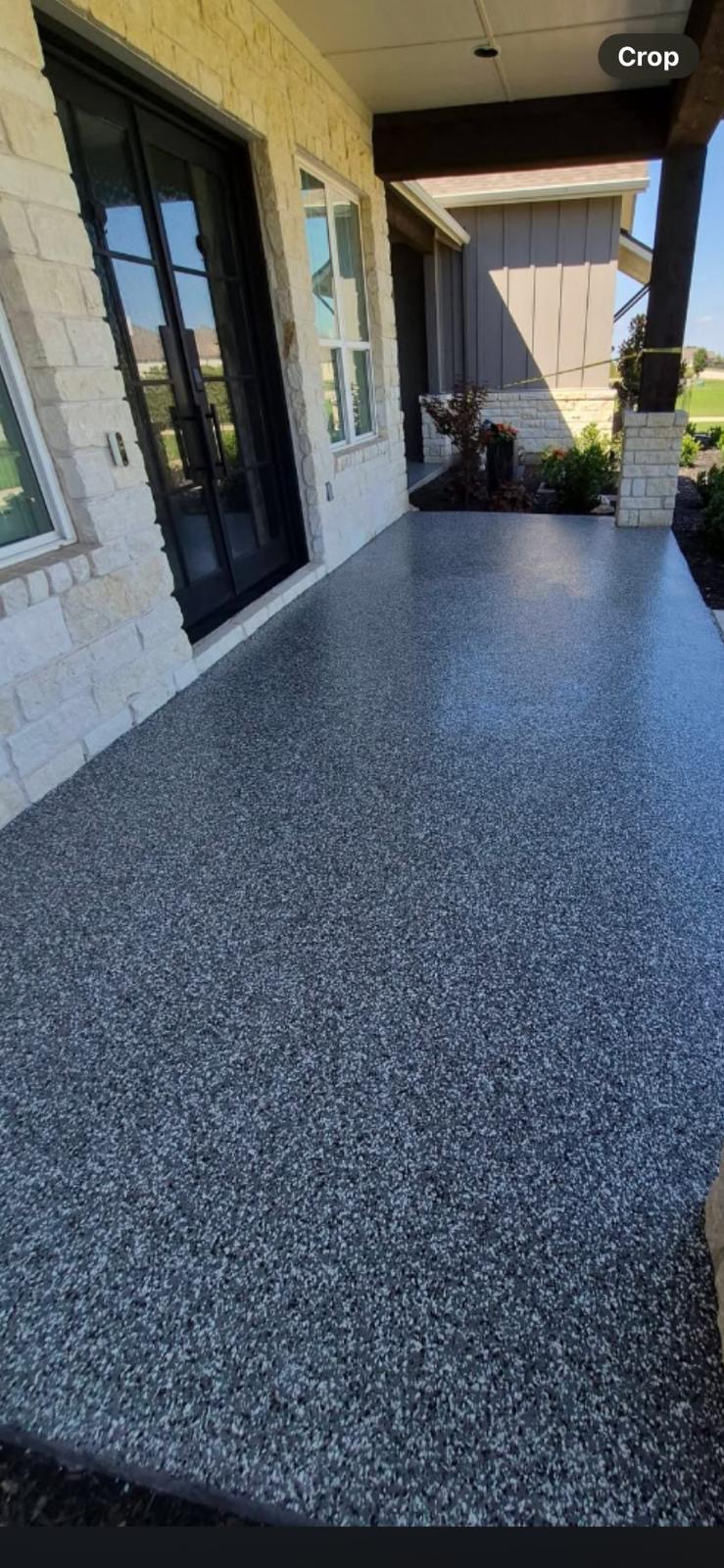
Built for the way you actually use the space.
Slip resistance can be tailored through system and aggregate selection rather than a fixed specification. We install broadcast aggregate systems and textured top coats suited to wash-bays, kitchens, ramps, external walkways and any area with a documented slip risk. Specialist testing and verification can be arranged through an appropriate third party where required by the project specification.
Anti-slip resin flooring, with slip resistance tailored through system and aggregate selection for wet, oily and pedestrian areas.
Slip resistance is a specification, not a colour. It has to be matched to the risk in the area. A smooth epoxy that looks the part in a showroom will not provide adequate grip on a wet kitchen ramp. Our anti-slip builds are calibrated to the required grip level, with the profile chosen for the expected contamination and operating conditions.
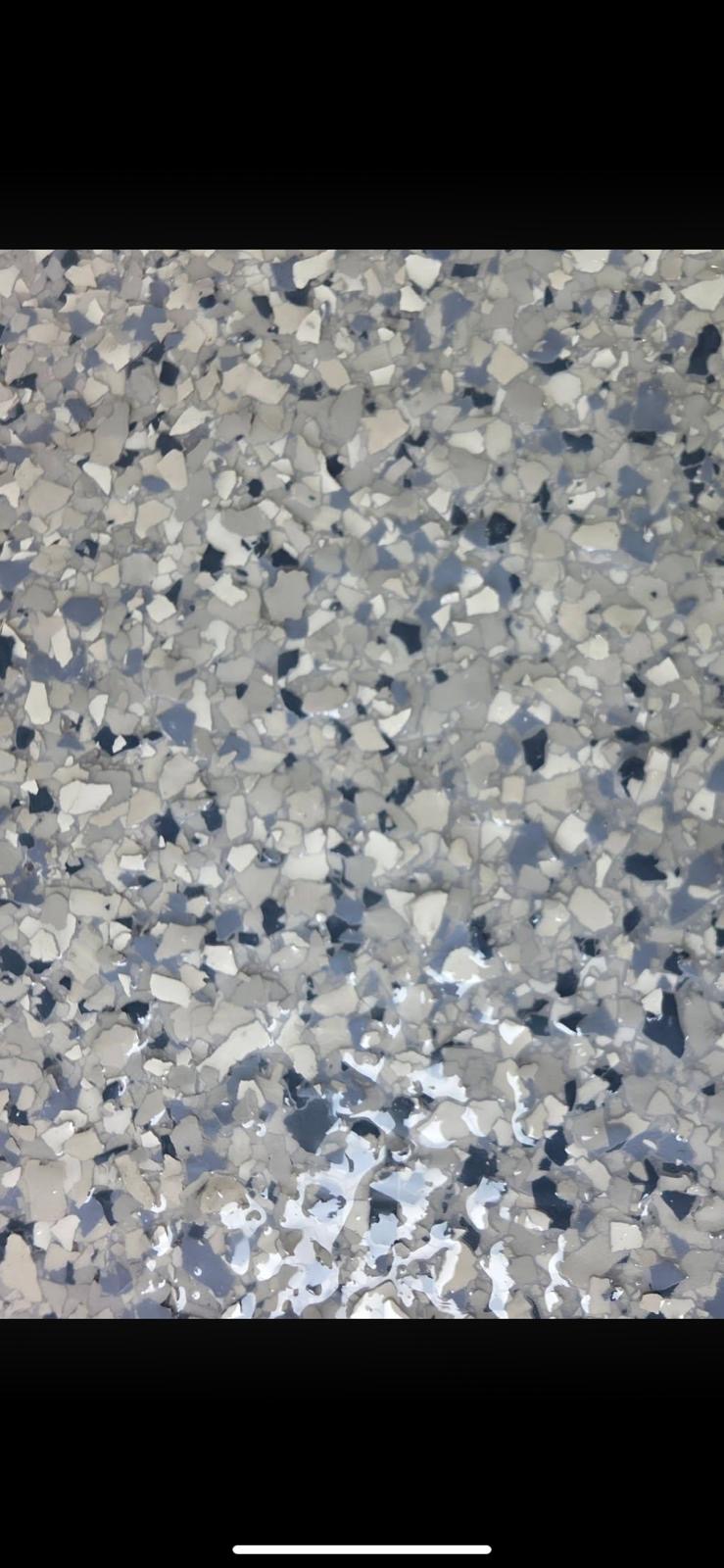
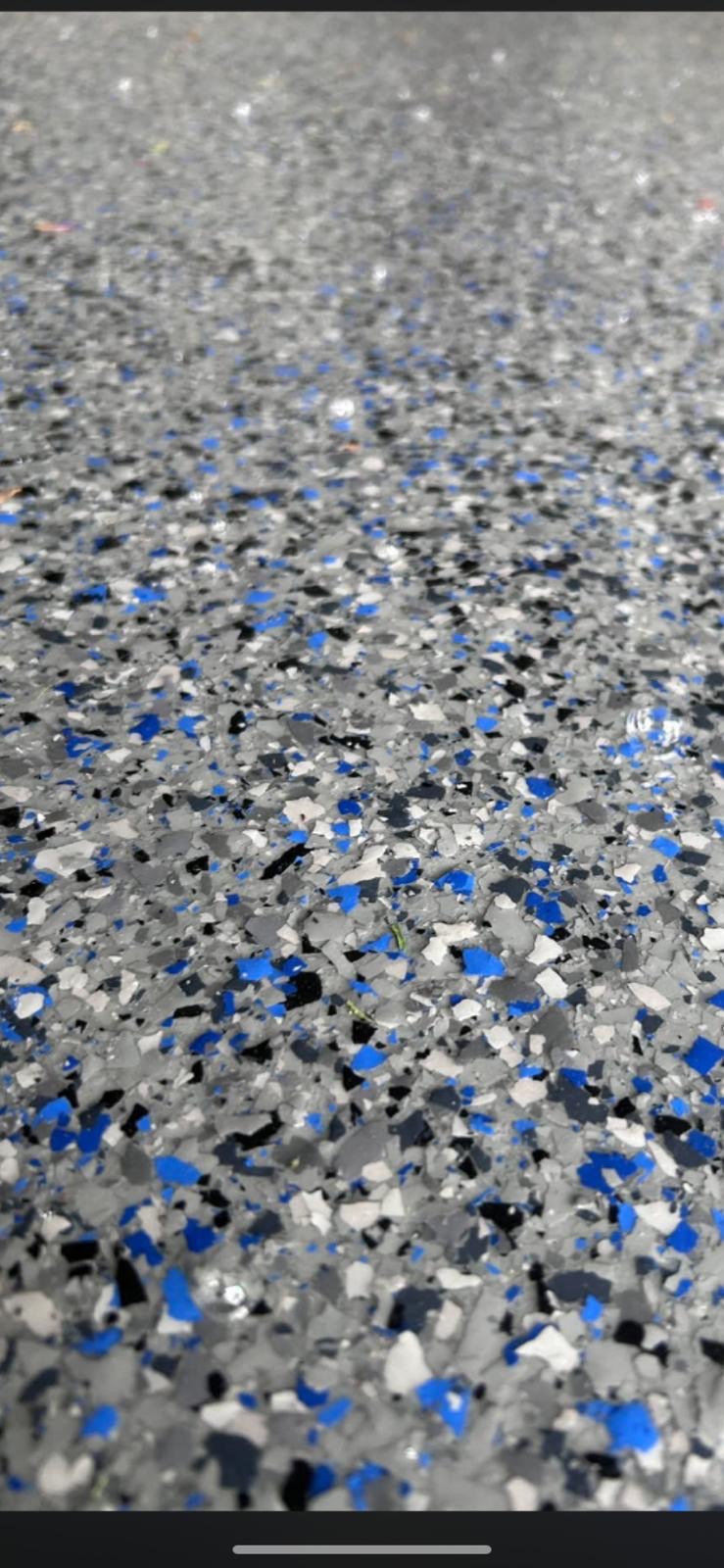
Anti-slip is not one product but a family of aggregate profiles broadcast into the wet resin build. Getting it right is a balance between grip and cleanability — a coarse profile gives more grip but is harder to mop, while a fine profile cleans easily but suits drier pedestrian zones. Slip resistance can be tailored through system and aggregate selection, and we help you set the right profile for each area.
Key benefits
- A range of slip ratings to suit the risk
- Broadcast quartz, silica carbide and aluminium oxide aggregates
- Slip pendulum test data supplied on request
- Colour-matched to safety zoning
- Suitable for internal and external areas
- Balances grip with cleanability
Our installation process
Every anti-slip resin flooring project follows the same disciplined sequence. Skipping steps is where floors fail — we don't skip.
- Step 01
Risk survey
We walk the area, log wet/dry zones, log chemical exposure (oil, grease, sanitiser) and confirm the slip rating each area needs.
- Step 02
Preparation
Diamond grinding or captive shot blast to a suitable profile.
- Step 03
Priming
Penetrating epoxy or PU primer depending on the substrate and top system.
- Step 04
Body coat
Coloured epoxy or PU body coat laid to specified thickness.
- Step 05
Aggregate broadcast
Quartz, silica carbide or aluminium oxide broadcast into the wet body coat to refusal. Excess is back-swept the following day.
- Step 06
Seal coats
One or two seal coats over the aggregate — the number and viscosity of seal coats controls the final R rating.
- Step 07
Slip test
We can pendulum test on completion and issue the data for your safety file.
Where it works, where it doesn't
We're honest about specification. A system installed in the wrong environment will fail no matter how well it's laid.
Suitable for
- Commercial kitchens and prep areas
- Wash-bays and vehicle areas
- Ramps and step nosings
- External walkways and loading yards
- Wet processing and food production
- Changing rooms and pool surrounds
Not suitable for
- Front-of-house retail and showroom where a smooth finish is required
- Areas cleaned only by hand mop and unable to accept aggressive aggregate
Advantages and trade-offs
Advantages
- Documented slip performance for HSE and insurance
- Aggregate profile matched to the risk
- Colour-matched to safety zoning
- Refreshable — top coat re-seals restore R rating
- Suitable for wet, oily and external environments
Trade-offs
- •Higher-R profiles are harder to clean than smooth finishes
- •Aggregate is felt through thin-soled footwear
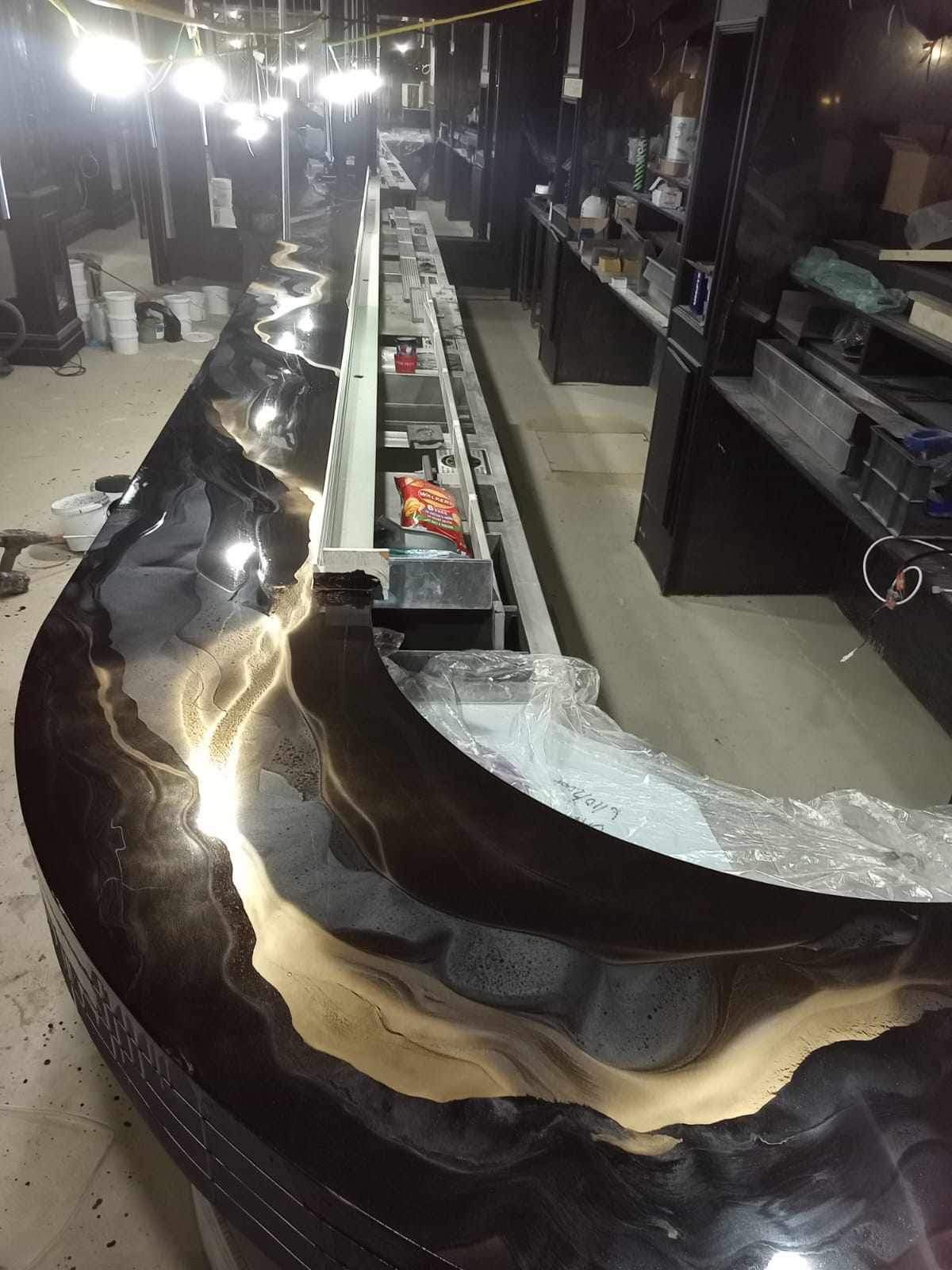
- •Not decorative in the way a metallic floor is
Durability and lifespan
Anti-slip systems hold their R rating until the sacrificial top coat wears, at which point a re-seal restores it. Traffic lanes and door thresholds wear first, and how quickly depends on traffic, contamination and cleaning — which is why we recommend periodic slip testing rather than a fixed interval.
A slip rating is a live specification — we recommend periodic pendulum testing in safety-critical areas so you have current data on file.
Curing times
Cure and return-to-service times vary by system and site conditions. Colder conditions extend them; warmer conditions shorten them.
| Stage | Time | Notes |
|---|---|---|
| Foot traffic | Varies by system and site conditions | Light walking in socks or clean shoes once the top coat has gelled. |
| Furniture return | Varies by system and site conditions | Light furniture, tools and shelving can be reintroduced. |
| Vehicle traffic | Varies by system and site conditions | Hot tyres and heavier point loads once the aliphatic PU seal coat has fully cross-linked. |
| Full chemical cure | Per manufacturer technical guidance | Chemical resistance, wet cleaning and heavy wear reach design spec. |
Maintenance and aftercare
Use a stiff-bristle brush or rotary machine with a coarse pad — a hand mop will not clean aggregate profiles properly.
Neutral-pH detergent daily; a PU-safe degreaser weekly in kitchens and wash-bays.
Aftercare checklist
- Rotary brush or coarse pad cleaning
- Daily neutral-pH detergent
- Weekly degreaser in kitchens / wash-bays
- Periodic pendulum slip test in safety-critical areas
- Re-seal traffic lanes when slip testing indicates it
Colour, finish and customisation
Colour is fully specifiable — RAL matching for safety zoning is common (yellow walkways, red hazard zones, green safe zones).
Slip resistance can be zoned within a single area — a finer profile in the main space, a coarser profile at doors and ramps — tied together visually.
Available finishes
- ◆Lower-grip finish for dry pedestrian zones
- ◆Light-grip finish for light wet and cleaning zones
- ◆Higher-grip finish for kitchens, wash-bays, ramps
- ◆Maximum-grip finish for heavy grease and wet processing
- ◆Colour zoning for safety demarcation
Send us the area, the risk and the cleaning regime — we'll come back with an R rating and slip test data.
Anti-Slip Resin Flooring — frequently asked
Do you supply slip test data?+
Yes. Pendulum test on completion with a written report for your safety file. Independent testing is available on request.
Which R rating do I need?+
Grip level is matched to the risk — dry pedestrian areas need less than kitchens, wash-bays or heavy-grease processing. We help you specify per zone.
Can I still clean it easily?+
Lower-grip finishes clean with a normal rotary. Higher-grip finishes need a stiff brush or coarse pad. There is a trade-off between grip and cleanability.
Will it wear smooth?+
Traffic lanes soften over time, at a rate that depends on traffic, contamination and cleaning. A top-coat re-seal restores the original R rating without replacing the whole floor — periodic slip testing tells you when.
Can it go outside?+
Yes. Aliphatic PU seal coats are UV-stable and suitable for external ramps, loading yards and walkways.
Related resin systems
Food Grade Resin Flooring
Polyurethane resin systems for food and beverage production.
ReadIndustrial Flooring
Heavy-duty resin systems built for industrial use.
ReadPU Flooring Systems
Polyurethane systems for the most demanding environments.
ReadWarehouse Flooring
Hard-wearing warehouse systems built for scale.
ReadAvailable across the West Midlands
We install anti-slip resin flooring across:
Call 07756 971 165 for a free quotation, or email admin@epoxyguys.co.uk.
More resin systems by Epoxy Guys
18 sectors. One specialist team.
Warehouse, factory, food, healthcare, retail, showroom and more — engineered resin systems delivered around your shutdown windows.
Ready to start your project?
Call for a free quote, or send your project details by email and we aim to respond within one working day.