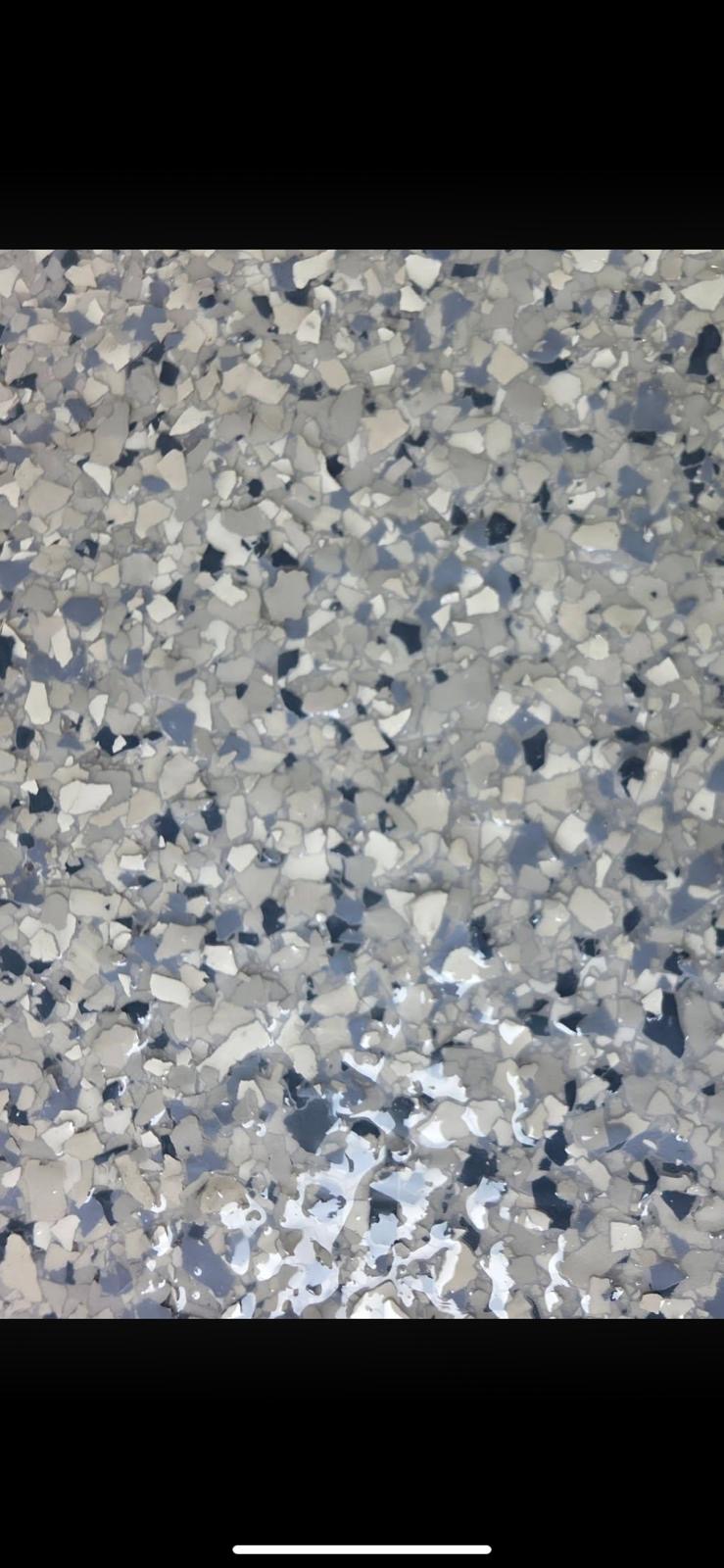
Factory Resin Flooring
Production-floor resin systems built for continuous manufacturing.
Built for the way you actually use the space.
Factory floors have to survive rotating shifts, MHE traffic, dropped tooling, oils, coolant and constant wash-down. Our factory resin systems are specified around your production layout — load class, chemical exposure and cleaning regime drive the build-up, not a generic data sheet.
Resin flooring for factories, production lines, assembly halls and manufacturing plants across the West Midlands.
A factory floor is a piece of production equipment. It has to hold flat under racking and machinery, resist the specific fluids the process produces, and stay serviceable through rotating shifts. Our factory systems are specified around the way the plant is actually run, not off a generic industrial template.
Our installations cover manufacturing, engineering, assembly, injection moulding, textile production and light industrial units across Coventry, Birmingham, Solihull and the wider West Midlands. Every quote follows a physical survey, moisture readings and a walk of the traffic routes with your engineering team.
Planning around operations? Our guide to how long commercial resin flooring takes explains preparation, curing, phased installation and downtime planning for warehouses and factories.
Key benefits
- Load-rated build-ups for MHE and heavy plant
- Chemical resistance matched to your process fluids
- Slip resistance zoned by area to suit the risk
- Bay layout, safety lines and hatching in one visit
- Phased around shift patterns to protect production
- Full 10-year workmanship guarantee in writing
Our installation process
Every factory resin flooring project follows the same disciplined sequence. Skipping steps is where floors fail — we don't skip.
- Step 01
Production survey
We walk the plant with your engineering or facilities lead, map MHE routes, log chemical exposures and confirm downtime windows. Moisture readings are taken on any slab that will be coated.
- Step 02
Mechanical preparation
Diamond grinding or captive shot blasting to a profile suited to the specification, HEPA-vacuumed to keep dust out of adjacent production.
- Step 03
Repairs and priming
Cracks, joints and spalls are cut and re-mortared. A moisture-tolerant epoxy primer is applied to bind and block residual substrate moisture.
- Step 04
Body coats
Self-smoothing epoxy screed or broadcast quartz build to a thickness sized for load class and thermal exposure.
- Step 05
Line marking and zoning
Bay lines, walkways and safety hatching are masked into the wet build and coated in contrasting resin so the marking is part of the floor, not a paint layer.
- Step 06
Top coat
Chemical-resistant aliphatic PU top coat to lock in aggregate and hit the specified slip rating.
- Step 07
Handover
Snag, sign-off, aftercare schedule and written guarantee.
Where it works, where it doesn't
We're honest about specification. A system installed in the wrong environment will fail no matter how well it's laid.
Suitable for
- Manufacturing and assembly plants
- Injection moulding and press shops
- Engineering and machine shops
- Light industrial and MRO facilities
- Textile and print production
Not suitable for
- Substrates with rising damp and no DPM (remediate first)
- Timber decks without a rigid overlay
- Areas subject to continuous solvent immersion (specify chemical-lined system)
Advantages and trade-offs
Advantages
- Long service life with correct specification
- Seamless, hygienic and easy to clean at scale
- Line marking survives MHE traffic
- Can be installed in phases
Trade-offs
- •Area under coating is offline to foot traffic and longer before MHE returns, depending on the system
- •Higher up-front cost than sealed concrete
- •Requires competent preparation — poor grind will fail
Durability and lifespan
On a correctly specified factory floor, wear presents as slow dulling of the sheen in MHE lanes long before the system itself fails. Service life varies with the system, substrate, environment, loading, use and cleaning, so we don't quote a fixed figure.
Real-world durability is driven by preparation quality, dry-film thickness and cleaning discipline. We set all three out at handover so the floor performs as designed.
Curing times
Cure and return-to-service times vary by system and site conditions. Colder conditions extend them; warmer conditions shorten them.
| Stage | Time | Notes |
|---|---|---|
| Foot traffic | Varies by system and site conditions | Light walking in socks or clean shoes once the top coat has gelled. |
| Furniture return | Varies by system and site conditions | Light furniture, tools and shelving can be reintroduced. |
| Vehicle traffic | Varies by system and site conditions | Hot tyres and heavier point loads once the polyurethane top coat has fully cross-linked. |
| Full chemical cure | Per manufacturer technical guidance | Chemical resistance, wet cleaning and heavy wear reach design spec. |
Maintenance and aftercare
Sweep daily to lift abrasive grit — grit under a forklift wheel is what abrades a top coat, not the wheel itself. Scrub weekly with a rotary machine and neutral-pH detergent.
Book a professional deep-clean periodically, and a top-coat re-seal in traffic lanes when inspection and wear indicate one is required to reset the sacrificial wear layer.
Aftercare checklist
- Sweep or dust-mop daily
- Weekly rotary scrub with neutral-pH detergent
- Clean aggressive spills promptly
- Soft-wheeled MHE where possible
- Periodic professional inspection
Colour, finish and customisation
Colour and layout drive safety and wayfinding. We match to RAL and BS colours and lay out full traffic management schemes to your GA drawings.
Sheen, slip resistance and aggregate profile are specified independently — a single plant can carry a satin finish in assembly, a broadcast finish on ramps and a heavy PU screed in wash-bays, tied together visually. Slip resistance can be tailored through system and aggregate selection.
Available finishes
- ◆Self-smoothing epoxy systems
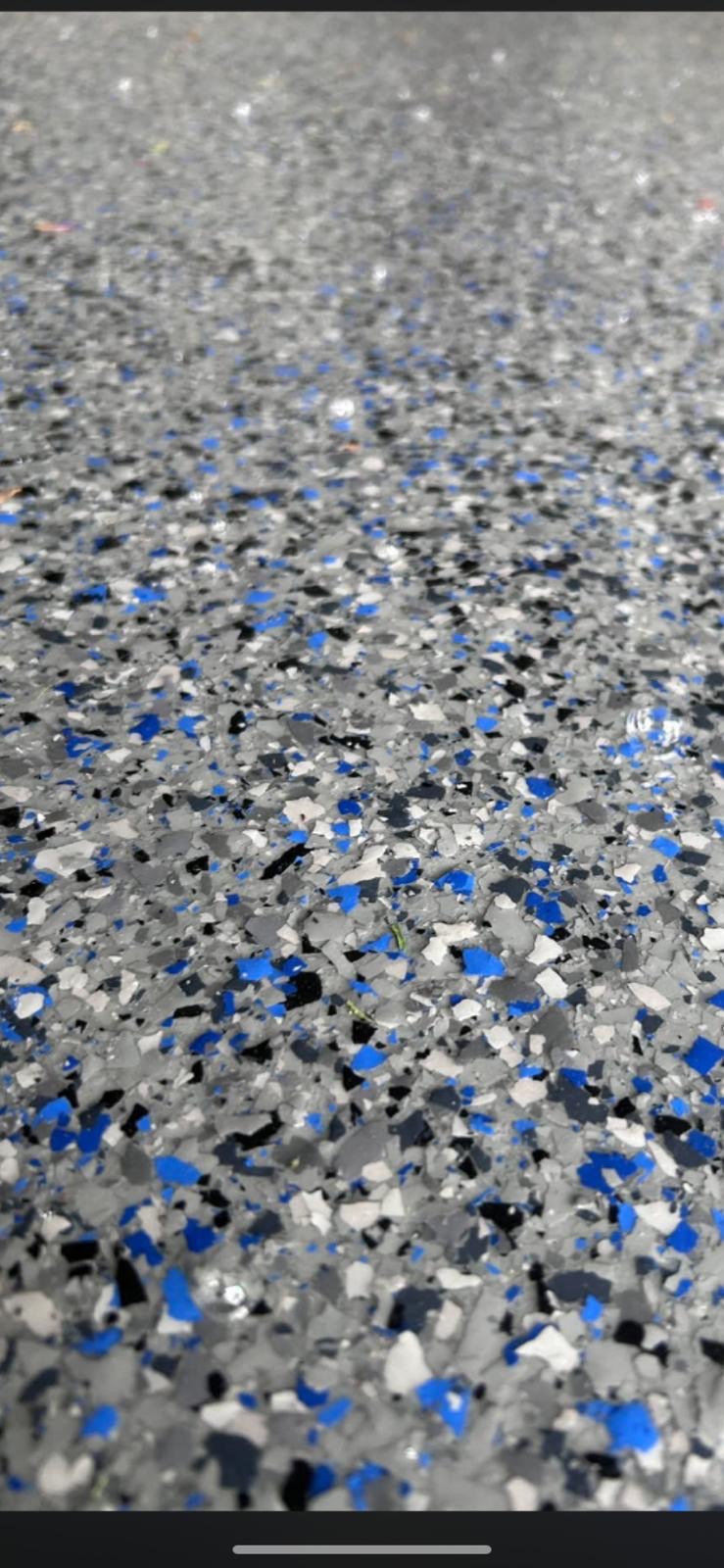
- ◆Broadcast quartz systems
- ◆Heavy-duty PU screeds for high-thermal-shock areas
- ◆Full RAL / BS colour matching
- ◆Slip ratings zoned to the risk
- ◆Integrated bay marking
Send us your GA drawings and MHE list — we'll come back with a phased programme and a written specification.
Factory Resin Flooring — frequently asked
Can you install while we keep production running?+
Yes. We routinely phase installs by bay, aisle or shift so at least part of the plant stays live. Nights and weekends where the specification allows.
What loadings can the floor take?+
Standard build-ups carry counterbalance forklifts up to 5 tonnes. Heavier point loads and reach trucks are handled with thicker PU screeds specified against your MHE list.
Will it resist cutting fluids and coolant?+
Yes. Our epoxy and aliphatic PU top coats handle hydrocarbons, water-based coolants and most process chemicals.
How much downtime should we plan for?+
Cure and return-to-service times vary by system and site conditions. Phased programmes keep the wider site operational throughout.
Do you cover the West Midlands only?+
Our core coverage is Coventry, Birmingham, Solihull and the wider West Midlands. We do travel further for larger contracts.
Related resin systems
Industrial Flooring
Heavy-duty resin systems built for industrial use.
ReadWarehouse Flooring
Hard-wearing warehouse systems built for scale.
ReadPU Flooring Systems
Polyurethane systems for the most demanding environments.
ReadConcrete Floor Preparation
Diamond grinding and shot blasting for resin-ready substrates.
ReadAvailable across the West Midlands
We install factory resin flooring across:
Call 07756 971 165 for a free quotation, or email admin@epoxyguys.co.uk.
More resin systems by Epoxy Guys
18 sectors. One specialist team.
Warehouse, factory, food, healthcare, retail, showroom and more — engineered resin systems delivered around your shutdown windows.
Ready to start your project?
Call for a free quote, or send your project details by email and we aim to respond within one working day.