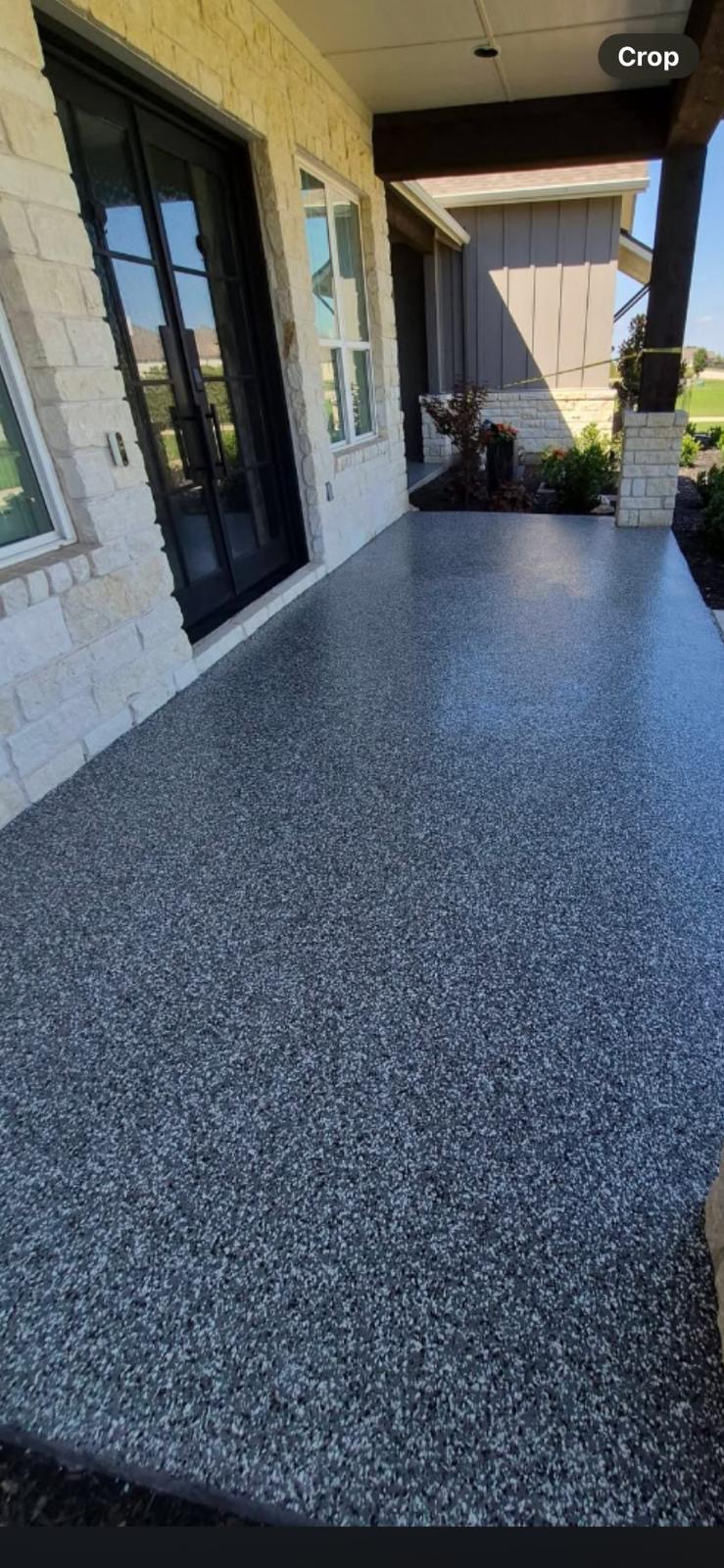
Built for the way you actually use the space.
PU (polyurethane) systems are the go-to where temperature shock, aggressive chemicals or constant wet conditions would defeat a standard epoxy. Used in food production, breweries, kitchens and chemical processing.
Chemical-resistant polyurethane flooring designed for demanding environments.
Polyurethane is what you specify when a standard epoxy won't survive the environment. Steam cleaning, aggressive food and dairy chemistry, constant wet processing, freezing cold stores, hot production kitchens. In conditions that would crack, blister or delaminate an epoxy, a heavy-duty PU screed simply keeps working.
We install PU flooring across the West Midlands in food and beverage production, commercial kitchens, breweries, dairies, chemical processing, cold stores and wet-process manufacturing. Because PU is not a one-recipe product, every specification is written around the operating conditions: temperature, chemistry, cleaning regime and loading.
Key benefits
- Resists thermal shock from steam cleaning and hot spills
- Excellent chemical resistance across food and process chemistry
- Suitable for wet, oily and cold environments
- Hygienic finish with integral coving, suitable for environments with strict cleaning requirements
- Build thickness specified to suit the application
- Cure and return-to-service times vary by system and site conditions
Our installation process
Every pu flooring systems project follows the same disciplined sequence. Skipping steps is where floors fail — we don't skip.
- Step 01
Survey and specification
We survey the space, identify chemical exposure, temperature range, wash-down regime and loading. From that we specify a system thickness, slip resistance and top coat chemistry to suit the environment.
- Step 02
Preparation
Captive shot-blasting to a profile suited to heavy PU screeds — a much more aggressive profile than epoxy needs, because a PU screed is thicker and needs a strong mechanical key.
- Step 03
Cove upstands
Where hygiene requires it, we form integral resin coving up the wall to eliminate the floor-to-wall dirt trap. Coves are formed before the main pour and blended in monolithically.
- Step 04
Primer or scratch coat
PU screeds are typically self-priming but heavily contaminated or damp substrates get a purpose-designed epoxy scratch coat or moisture-tolerant primer first.
- Step 05
PU screed pour
The PU screed is trowel-applied to the thickness specified for the duty — standard, wet process or heavy thermal shock. Aggregate is integral to the screed so slip resistance is built through the full depth, not just at the surface.
- Step 06
Seal coat
A pigmented PU seal coat is applied to close the surface, deliver the colour and finalise the slip resistance. Hygiene-critical areas get a chemically bonded seal coat, subject to the selected manufacturer's system data.
- Step 07
Sign-off
Snag, aftercare, guarantee. Return-to-production timing depends on the system and site conditions.
Where it works, where it doesn't
We're honest about specification. A system installed in the wrong environment will fail no matter how well it's laid.
Suitable for
- Food and beverage production
- Commercial and industrial kitchens
- Breweries, distilleries and wineries
- Dairies and cold stores
- Chemical processing and pharma
- Wet-process manufacturing
Not suitable for
- Aesthetic-first designed interiors (PU is a functional finish)
- Areas requiring high-gloss decorative sheen
- Sound substrates where a standard epoxy build would meet the spec more cost-effectively
Advantages and trade-offs
Advantages
- Handles conditions that would challenge a standard epoxy floor
- Full chemical, thermal and mechanical resistance
- Integral coving to support hygiene requirements
- Very fast return to service
- Can be specified for food-production and hygiene-sensitive environments where supported by the manufacturer's technical documentation
Trade-offs
- •Higher up-front cost than epoxy
- •Functional finish — not the finish for a designed retail interior
- •Requires specialist installation (heavy trowel-applied screed)
Durability and lifespan
PU screeds are a durable option for industrial floors. They can be specified to take daily steam cleaning, chemical wash-downs and constant wet loading — conditions that can challenge other floor finishes. Actual service life varies with the system specified, the substrate, the environment, loading, use and cleaning, so we don't quote a fixed figure.
The screed itself is monolithic — the aggregate, pigment and binder are integral through the full thickness, so surface wear simply exposes more of the same material underneath. There is no thin decorative layer to wear through.
Curing times
Cure and return-to-service times vary by system and site conditions. Colder conditions extend them; warmer conditions shorten them.
| Stage | Time | Notes |
|---|---|---|
| Foot traffic | Dependent on system | PU screeds are generally fast-curing — programme and cure requirements depend on the resin system selected and site conditions. |
| Light equipment | Dependent on system | Racking, trolleys and light equipment return once the system has reached the required cure stage. |
| Full production | Dependent on system | Wash-down, chemical exposure and full production loading resume once the system has reached full cure. |
| Full chemical cure | Dependent on system | Peak chemical resistance and full cross-linking, per manufacturer technical guidance. |
Maintenance and aftercare
PU floors are designed for constant heavy cleaning — that's the whole point. Daily wash-down with rotary machines, alkaline degreasers and hot water is fine, subject to the selected system's technical guidance. The one thing to watch is very concentrated acid or bleach dwelling on the surface for long periods.
Because the screed is monolithic, maintenance is minimal beyond routine cleaning. A visual inspection and a professional deep-clean on a schedule agreed at handover is usually all the plant will need.
Aftercare checklist
- Daily wash-down as per your hygiene and cleaning schedule
- Use alkaline degreasers within the range recommended by the manufacturer
- Rinse aggressive acids and bleach after use
- Annual visual inspection of coves and drain edges
- Professional deep-clean on the schedule agreed at handover
Colour, finish and customisation
PU is a functional-first system but colour is still specifiable within a practical range. Zoning by process area is standard practice — red for raw meat, blue for dairy, green for vegetable prep, and so on. Coving is always colour-matched to the main floor.
Slip resistance can be tailored through system and aggregate selection, chosen against the wet / greasy conditions in the specific zone.
Available finishes
- ◆Standard-duty PU screed
- ◆Wet-process PU screed
- ◆Heavy thermal-shock PU screed
- ◆Integral coved upstands
- ◆Slip resistance tailored through system and aggregate selection
- ◆Colour-zoned layouts for hygiene-sensitive environments
Share your process, chemistry and cleaning regime — we'll write a spec that survives the environment.
PU Flooring Systems — frequently asked
Why PU instead of epoxy?+
PU can be specified to handle thermal shock (steam cleaning, boiling spills, cold rooms), aggressive food chemistry and constant wet conditions where a standard epoxy may struggle.
How thick is a PU floor?+
System build thickness is determined by substrate condition, intended use and specification — from standard food prep through to heavy thermal shock duty like meat plants and bottling lines.
Is it suitable for hygiene-critical areas?+
Resin flooring systems can be specified for environments operating under strict hygiene and cleaning requirements, including integral coving up the wall, subject to the selected manufacturer's system data.
How fast can we be back in production?+
Cure and return-to-service times vary by system and site conditions — we confirm this as part of the specification.
Will it survive high-pressure steam cleaning?+
PU systems can be specified for daily steam and hot-water wash-down, dependent on the manufacturer's technical guidance.
Related resin systems
Industrial Flooring
Heavy-duty resin systems built for industrial use.
ReadCommercial Flooring
Seamless resin floors for offices, retail and hospitality.
ReadWarehouse Flooring
Hard-wearing warehouse systems built for scale.
ReadAvailable across the West Midlands
We install pu flooring systems across:
Call 07756 971 165 for a free quotation, or email admin@epoxyguys.co.uk.
More resin systems by Epoxy Guys
18 sectors. One specialist team.
Warehouse, factory, food, healthcare, retail, showroom and more — engineered resin systems delivered around your shutdown windows.
Ready to start your project?
Call for a free quote, or send your project details by email and we aim to respond within one working day.